



 7 mins
A filmmaker and curator from Zaporizhzhia, Kseniia Opria will be presenting on October 18th with her Fellowship host DCTV in New York a never-seen-before in the US selection of Ukrainian documentary films.
This week, the 2026 cohort of ArtsLink Fellows will start their in-person residencies across the US and in Europe. Each is hosted by partner organizations with which they have already forged strong connections through weeks of discussions and planning. They all have 5 busy weeks ahead, and for some, public events are already scheduled. Kseniia Opria, our inaugural Razom ArtsLink Fellow, is one of the Fellows whose event you can already add to your calendar.
On October 18, Kseniia and her hosts, Charlotte Mangin and Dara Messinger of DCTV, a nonprofit media arts center in New York, will present “Deconstructions: Right to the Truth“, a retrospective of Ukrainian documentary films of the late 1980s and 1990s.

This CEC ArtsLink supported event will screen the following five films, all for the first time in the US:
> Sunday Morning…
> Right to the Truth
> Wound
> Sergei Paradzhanov. Visits
> The Past?…
Full details about each film can be found below – The screening will be followed by a talk with Kseniia (in-person) and Yuliia Kovalenko (remotely), program director at Docudays UA.
This upcoming New York screening prompted us to sit down with Kseniia to talk about the film selection and her work with Docudays UA.
“Deconstructions: Right to the Truth” draws on archival films from the late Soviet period and the 1990s. What made this the right moment to bring them back?
Since 2022, Ukrainians have become much more attentive to their history and cultural heritage, as the full-scale war has made us feel their value and the risk of losing them. Ukrainian state archives hold hundreds of forgotten films that still have enormous potential.
This is why the title of the program, Deconstructions, speaks both to the films’ themes, which are connected to decolonization, and to the recovering the names and legacies of brave and talented filmmakers. As a generation born in the 2000s, we didn’t know about many of them, but we are finally beginning to rediscover these treasures, piece by piece, on dusty archive shelves.
How does the program encourage viewers to read these films through a decolonial lens?
We have to acknowledge that Ukraine was a former colony of Russia, and we still feel the consequences of that colonial past today. During the Soviet period, the events referenced in these films took place: Chornobyl, the war in Afghanistan, the repression of artists, and mass deportations. These are deeply painful events, but as subjects of our own history, we have to take responsibility for confronting them and deconstructing the perspective that, for decades, described as “tragedies” what was, in fact, a “crime.”
What thread links these five stories together, and how did you shape the order and pairing of the screenings?
“Chornobyl became a catalyst for a public dialogue that no longer wanted to hide the sharp edges,” as one of my sociology professors, Volodymyr Shelukhin, put it so aptly at a Docudays UA discussion this summer.
These films were made from the late 1980s through the mid-1990s, and they existed within the same historical landscape. The first film, Sunday Morning, is about everyday life and the reality that existed at the time. The films that follow, arranged in almost chronological order, reconstruct that reality through a series of key historical events.
These films were digitized exclusively for this series. What was the process like?
The films were digitized from 35mm positive film using a Blackmagic Cintel Scanner exclusively for the Docudays UA festival, which took place in Kyiv this summer. This was made possible thanks to the collaboration of my colleagues Yuliia Kovalenko – who, by the way, will take part in the Q&A after the screening at DCTV – the curator of the full Deconstructions program and the Program Director of Docudays UA. And Alona Penzіi, the head of the Dovzhenko Centre, one of Ukraine’s largest film archives, and the curator of this particular Ukrainian selection of films, which I will have the honor of presenting for the first time in the United States.
What does it mean to present this in the current US context?
These are films that the Soviet authorities would never have wanted American audiences to see, because they reveal the vulnerability of that state. Fortunately, we are no longer living in the Soviet Union or in the era of the Cold War, so we can be honest and find points of connection through which we can reflect on collective trauma and think about how to prevent the mistakes of the past from being repeated.
Kseniia Opria’s Razom ArtsLink Fellowship is supported by Razom for Ukraine.
Sunday Morning…
Dir. Khadzhy-Murad Mamedov, 1987, 17 min

A collective portrait of women created during the gathering of firewood. Hard labour is not so daunting in good company, with conversations about life, death, loneliness, and men; with criticism of “glasnost” (the Soviet political policy in the 1980s), seasoned with folk humour.
Right to the Truth
Dir. Heorhiy Shkliarevskyi, 1989, 10 min

Kyiv, 1989. On April 26, to mark the anniversary of the Chornobyl disaster, a rally will take place at Dynamo Stadium. The stands are packed, and the scoreboard reads, “Chornobyl, Prypiat: a cautionary tale.” The public, emboldened by Chornobyl and “glasnost” (Mikhail Gorbachev’s policy of maximum transparency in government agencies’ activities and freedom of information in the 1980s), takes to the streets searching for truth.
Despite the time that has passed since the tragedy, there is still no clear awareness in society of the real dangers posed by radiation, nor a sense that any officials have been held accountable for the catastrophe — or even for staging the May Day demonstration in the first days of dealing with the aftermath of the accident.
As in his other reportage films of this period, a representative of the critical school of Ukrainian documentary filmmaking of the 1980s, Heorhiy Shkliarevskyi builds the film around the direct speech of his protagonists — liquidators, former residents of the “zone,” and concerned Kyiv citizens. Alongside them, the microphone itself becomes one of the film’s protagonists — a late Soviet symbol of an awakened democracy. It is precisely at this time that people begin to speak about colonial relations between Russia and Ukraine.
Wound
Dir. Khadzhy-Murad Mamedov, 1988, 17 min

Maimed and broken soldiers return home from Afghanistan, and there is neither pomp nor joy in this return. For the men and their mothers, there is only a complete lack of understanding of the reasons for the bloodshed and the high price they have had to pay for the war. Yet the force of personal drama is such that it overcomes fear of the system that seeks to silence the tragedy.
The Afghan war became one of the most powerful factors in the collapse of the USSR, as Ukrainian mothers and society as a whole began to realise that their children were being killed for someone else’s imperial illusions.
Sergei Paradzhanov. Visits
Dir. Anatolii Syrykh, 1994, 12 min
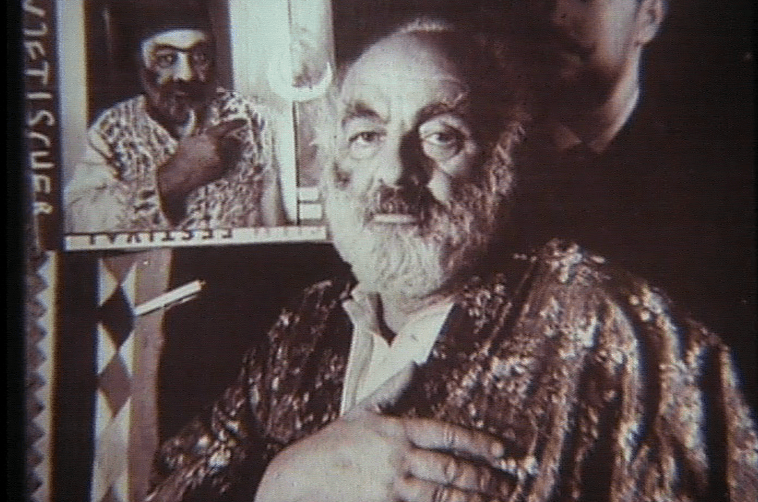
In November 1988, director Anatolii Syrykh met with Sergei Paradzhanov in Tbilisi to film a documentary portrait of him. However, Paradzhanov was clearly not inclined to talk about his art. As a compromise, Syrykh suggested speaking about the artist and the era, to which Paradzhanov immediately replied that he had coughed up blood that morning.
This is a candid confession about the most difficult moments of his life. The film combines archival footage with a critique of the Soviet film system and is part of a cycle of portraits of the Sixtiers created by director Anatolii Syrykh.
The Past?…
Dir. Rafail Nakhmanovych, 1995, 31 min
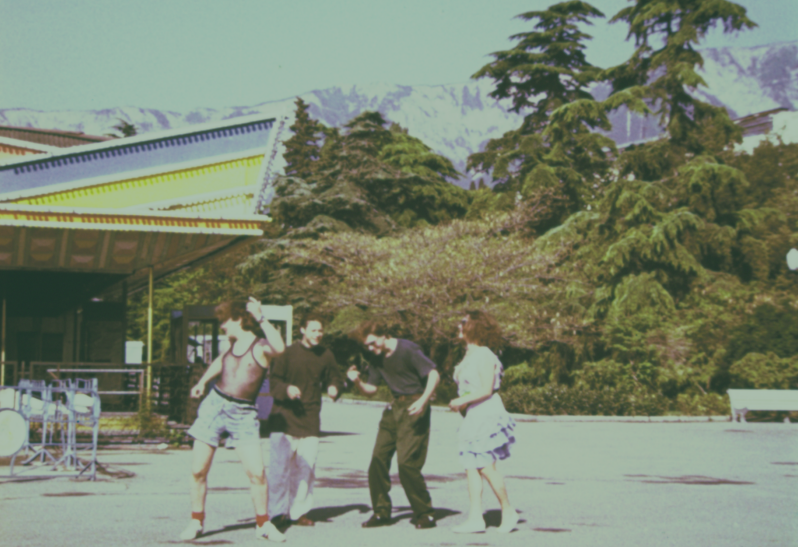
The film tells the stories of Crimean Tatars who returned to their homeland half a century after their forced deportation by Stalin’s regime on 18 May 1944. At the heart of the film is an interview with Besibe Aksakova, an activist in the Crimean Tatar movement. She shares her own experience of exile and reflects on how, in her life story, the statuses of “war heroine” and “enemy of the people” were paradoxically combined.