A Field in Motion: Supporting Artists at Risk in the USA
PUBLISHED: 27/03/26 | 🕑 7 mins
Artists in the United States are navigating an increasingly hostile landscape, shaped by politicized funding cuts, censorship, government interference, and tightening mobility restrictions. For CEC ArtsLink, whose work has long centered on artists crossing borders and building solidarity across cultures, this moment raises urgent questions: what does it mean to support artists, organizations, and cultural networks at risk when the risk is also here, in the US? This article shares how we are responding to this shift alongside our partners, with two significant developments, and a glimpse of what is already happening on the ground.
The Artistic Freedom Monitor USA
Led by immigration and human rights attorneys, Artistic Freedom Initiative (AFI) provides pro bono immigration representation and resettlement assistance to international artists at risk. Earlier this year, they launched a major new tool for the field: the Artistic Freedom Monitor USA. A first-of-its-kind research and advocacy platform documenting government actions that threaten artistic freedom and the independence of cultural institutions in the United States, launched in response to an escalating wave of censorship, politicized funding decisions, and ideological interference in cultural life.
The Monitor works on three levels. The AFM Tracker is a public, continuously updated database of federal and state government actions, browsable by theme or chronology. The Spotlight Reports translate policy into human reality: built from qualitative reporting with artists, arts NGOs, museums, libraries, universities, and other cultural institutions, they capture the real-world effects of laws, funding decisions, and governance changes on programming, staffing, and creative expression. The first Spotlight, the 2025 Fact Sheet, documents four categories of restriction already in play: politicized funding; censorship and content-based restrictions; interference in the governance and administrative control of arts institutions; and immigration and mobility restrictions for artists. And the Monitor’s Strategic Action arm goes further still — translating evidence into litigation and model legislation designed to protect cultural institutions and reinforce viewpoint-neutral governance.
The initiative is developed in partnership with Democracy Forward, Human Rights First, and the Pro Bono Programs at Stanford Law School and UC Berkeley School of Law.
Watch AFI’s full presentation of the Monitor:
ArtsLink Assembly 2025: Defending Each Other
Last November, we organized the ArtsLink Assembly 2025 at La MaMa in New York, co-produced with Artistic Freedom Initiative and in partnership with Artists at Risk Connection and On the Move — a two-day gathering focused on building collective support for artists in the US amid persecution, crisis, and conflict, bringing together artists, resettlement organizations, arts support networks, funders, and researchers to share experiences and develop strategies for resilience and a supportive cultural infrastructure for artists and cultural workers across the country. Those of you who were there will remember the energy in the room: a genuine and powerful wave of concern, engagement, and collective will.
Stepping Up: Building a Solidarity Movement | March 2026, NY
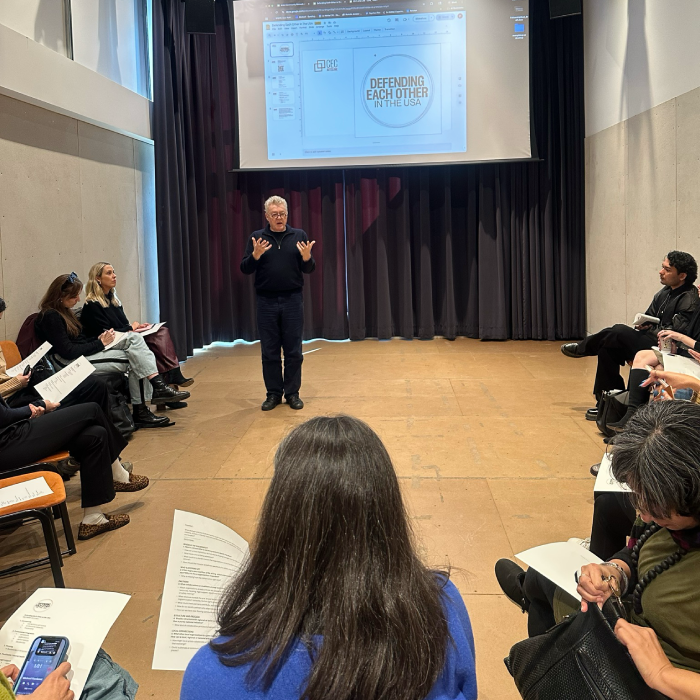
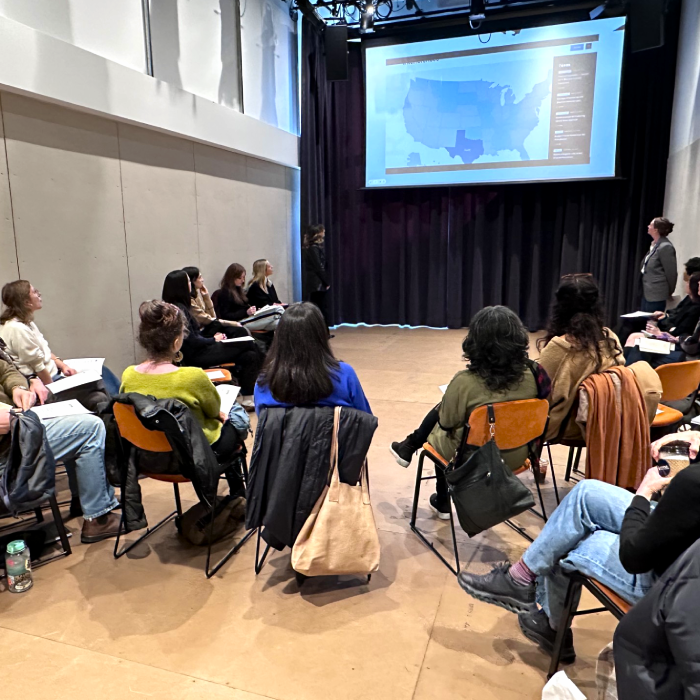
From that paper, the work continued. On March 18th, we brought a small group together in New York — Assembly participants alongside new voices interested in joining this ongoing initiative — for an intimate Stepping Up follow-up gathering, under the caring hosting of La MaMa.
The room was focused and committed. What emerged from the discussion was a clearer, shared sense of what this movement is actually for, what it needs to do to be useful. Four purposes kept surfacing:
Connecting artists and organizations working to improve conditions for artists at risk, so that people aren’t working in isolation and resources can be shared.
Linking resettled and at-risk artists in the US with the organizations best placed to support them — because too often, the people who need help don’t know where to find it, and the organizations that can help don’t know who needs them.
Creating physical space — a studio or workspace where resettled artists can actually practice their work, not just be administratively supported.
Advocating across cultural and civic agencies to carve out genuine space for artistic freedom: for artists, projects, programs, training and development, welfare support, and advocacy together.
What's Next
This is an ongoing initiative, and the next gathering is already in the works: we’ll be hosting another event in New York this coming July. More details soon, and if you’d like to be part of the conversation before then, please reach out at info -at -cecartslink.org.
Defending artistic freedom in the United States requires a collective responbisility. That is what this initiative is working toward, and there is room for all voices in it. Your involvement, thoughts, and advocacy are all critical for the future of the cultural field.
Also in Our Network: The National Coalition Against Censorship
The National Coalition Against Censorship (NCAC), who joined us as speakers at the 2025 Assembly, have been building their own significant response to the current climate. In May 2025, NCAC and the Vera List Center for Art and Politics convened a group of cultural leaders to assess needs and develop strategies in response to present threats to artistic and curatorial freedom and institutional independence. A process that led to Collective Courage: A Nationwide Statement of Values and Principles for the Field of Arts and Culture. The statement has since gathered a wide coalition of institutional and individual signatories across the US cultural sector. If you haven’t signed yet, you can do so at collective-courage.com.
NCAC’s work is now moving into concrete advocacy. They are currently collecting stories from arts organizations and individuals impacted by the NEA’s 2025 grant restrictions prohibiting recipients from “promoting gender ideology” — stories that will inform a legal brief challenging the constitutionality of those restrictions. Submissions are open until April 6.
And on April 10th, NCAC’s Collective Courage Conversation Series returns with a session on how cultural institutions are navigating ideological pressure while holding firm to their values. RSVP here.